

Behind every discovery is a patient waiting for hope
That’s why donors like you, give our scientists the chance to gather the evidence they need, and move their research forward uninterrupted.
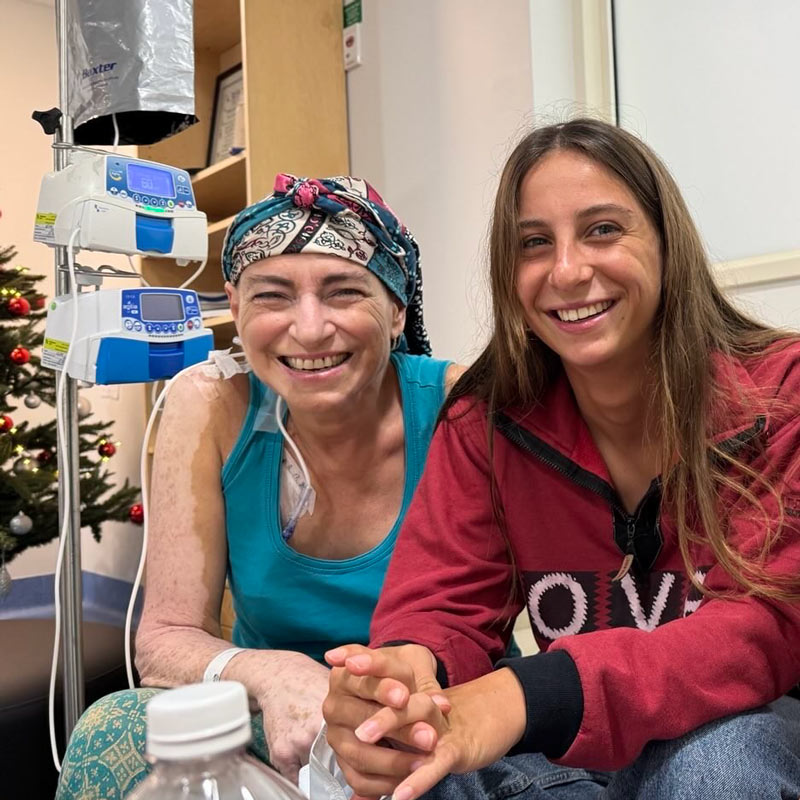
At our Centre for Rare Diseases & Gene Therapy, Dr Charles (Chuck) Bailey, is developing a truly innovative approach to helping patients with blood cancer get earlier, safer and more equitable access to life saving chimeric antigen receptor (CAR) T cell treatment.
Sevinç's story
Sevinç was on an exciting countdown to an overseas trip, with plans to meet up with her daughter who was on a gap year, but just days before she and her husband were due to fly, she was diagnosed with lymphoma.
“It was a real shock, but we had so much to do with cancelling flights and hotels that we just had to be pragmatic about it. It didn’t really sink in at first,” says Sevinç.
Reality soon hit when she began her first round of chemotherapy. It lasted five months only for her to find out that it didn’t work. Doctors started her on a second round. That too was unsuccessful.
Not only was she feeling incredibly sick, she was beginning to realise that this fight was going to be harder than she first thought.
“The impact of the second round of chemo was 100 times worse than the first,” says Sevinç. “It was just terrible.”
The treatment was taking a severe toll on her body and despite the failed chemotherapy, she still didn’t qualify for CAR T therapy. It was only when Sevinç developed a bowel obstruction that she finally became eligible.
Surgery wasn’t an option, so Sevinç was given radiotherapy to try to shrink the mass while she waited. Devastatingly, it didn’t work. By then, the months of treatment had weakened her body massively, and her white blood cell levels were too low for her cells to be collected for CAR T treatment. All she could do was wait and hope that her body would recover enough, knowing the cancer was still growing.
“I was in a lot of pain and I just kept thinking that this cancer must be growing so fast,” recalls Sevinç.
When she was finally well enough, the T cells were collected from her blood and sent to North Carolina in the US to be genetically modified before they could be infused back into her body to do their job of seeking out and destroying the cancer.
When the cells finally came back, Sevinç spent three weeks in hospital, facing the uncertainty of side effects that can be severe and, in some cases, fatal. Every day brought the fear of what might come next.
“Knowing how bad the side effects could be, every day you’re thinking ‘will today be the day that I end up in ICU or worse?’, the emotional weight for me and my family was just so heavy,” says Sevinç.
Luckily, the treatment worked and Sevinç is now 15 months post-CAR T cell treatment and remains in remission, but she knows how close she came to never getting the chance.
She also knows that much of what she endured might have been avoided. If CAR T were available as a first-line treatment, she wouldn’t have had to go through months of debilitating chemotherapy and radiotherapy, watching her body weaken, before she could access a therapy that might have helped her from the start.
At Centenary, Chuck’s team is developing a way to make CAR T cell therapy safer, easier to deliver and more widely available.
Instead of collecting a patient’s T cells and reprogramming them in specialised facilities (which are often overseas), the aim is to generate CAR T cells directly inside the body using a targeted single-dose treatment.
This would reduce the cost of treatments, create more access and completely transform the patient experience giving people like Sevinç an earlier chance at beating cancer.
Kate’s story
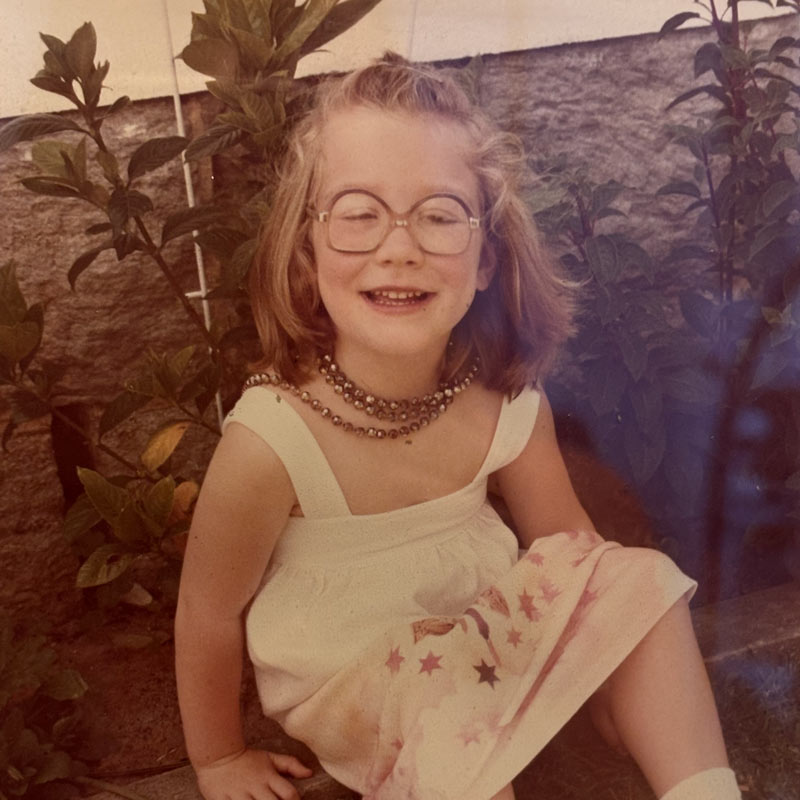
Kate was just two years old when she underwent her first eye surgery. Too young to remember, but the appointments and surgeries have been a constant in her life ever since.
Kate has high myopia, a severe form of short-sightedness where the eyeball grows too long from front to back. Glasses can reduce the blur, but they can’t change the shape of the eye. That stretching leaves the retina thin and fragile, always at risk of tearing, detaching, or wearing away. It also significantly increases the risk of developing sight-threatening eye disease.
High myopia usually means a prescription of around -6. Kate’s is -14.
“Growing up I had these big, brown thick-lensed glasses. I was so self conscious about it,” says Kate. “As I got older, I had very scary moments such as a detachment at the age of 20, which can lead to blindness.”
Since then she’s had a bleed, several lasers to relieve pressure build up and cataract surgery in both eyes, among many other treatments.
Cataracts are a recognised complication of high myopia and at 50 years old, Kate’s cataract surgery came 20 years before most ever need it. And while it helped, her vision is far from fixed. “It’s something that will never be fixed. There is a potential for more improvement with another surgery, but I just can’t face the idea that something could go wrong and I’d lose my sight permanently - the anxiety and worry is too much.”
Each hospital appointment comes with weeks of anticipation and an anxious knot in her stomach - a worry that this could be the day that she learns of another deterioration or need for surgery.
Kate has very limited sight in one of her eyes. “When I cover my better eye, it terrifies me to think that this is what the future could be like,” says Kate. “It would be devastating to me beyond what I can describe if anything happened to my good eye. The risk of losing my sight completely and never being able to see my children’s faces again has been a constant source of anxiety for years.”
Two months ago that fear became very real when Kate began to get unusual symptoms in what she calls her ‘good’ eye. “I was seeing more floaters than usual and I just knew that something was wrong.”
Kate rushed to get an appointment with her surgeon that day. It turned out that it was actually her ‘bad’ eye that had a tear, which needed immediate action and is still under regular monitoring.
“Its so important that research is pushed forward in this area,” says Kate. “Hearts, kidneys and other organs can be replaced, but eyesight can be lost forever. I hope with new interventions and treatments that there is a future where no one has to live with the fear of waking up one morning and their whole world changes.”
This is a world that Yagiz is working towards.
“This new platform takes the child’s eye measurements, and compares them with children of the same age, sex and background. It then builds a working model of that child’s eye, which runs years into the future,” says Yagiz.
“Like a sat-nav, it then recommends the gentlest change of course that keeps the eye out of the danger zone, and reroutes at every visit as the child grows.”
Life for Kate means hospital visits every six months for the rest of her life. “I’ve still got a lot of life to live and everyday I’m grateful that I can still wake up and see my girls. It’s so easy to take your sight for granted, and that’s something I’ll never do,” says Kate.
Imagine hearing the words “the treatment worked,” or opening your eyes each morning knowing your sight is safe. That is the future Centenary researchers could create with your support.
Dr Yagiz Aksoy at the Centre for Biomedical AI, is building a groundbreaking artificial intelligence platform to keep children’s eyesight safe and out of danger. The platform developed with ophthalmologists Dr Shanel Sharma and Dr Loren Rose,(short-sightedness) progression and provide tailored, evidenced treatments to slow it down.
