

Help drive the discoveries that will lead to life-changing breakthroughs.
Too many families are still living with the weight of illness and its far-reaching impact. We’re determined to change that.
At Centenary, we’re always thinking about the future we’re creating. Every day, our researchers and scientists wake up with one mission: to make discoveries that will improve human health.
But our researchers aren’t the only ones who make change possible - it’s our donors, people like you, who fund the scientists, provide the equipment, and ensure the continuity that keeps innovative research moving forward uninterrupted.
We recently spoke to two families who, like all of us, hope for a world where research breakthroughs stop devastating diseases in their tracks.
Lead image. Vanessa sadly passed away at the age of 24.
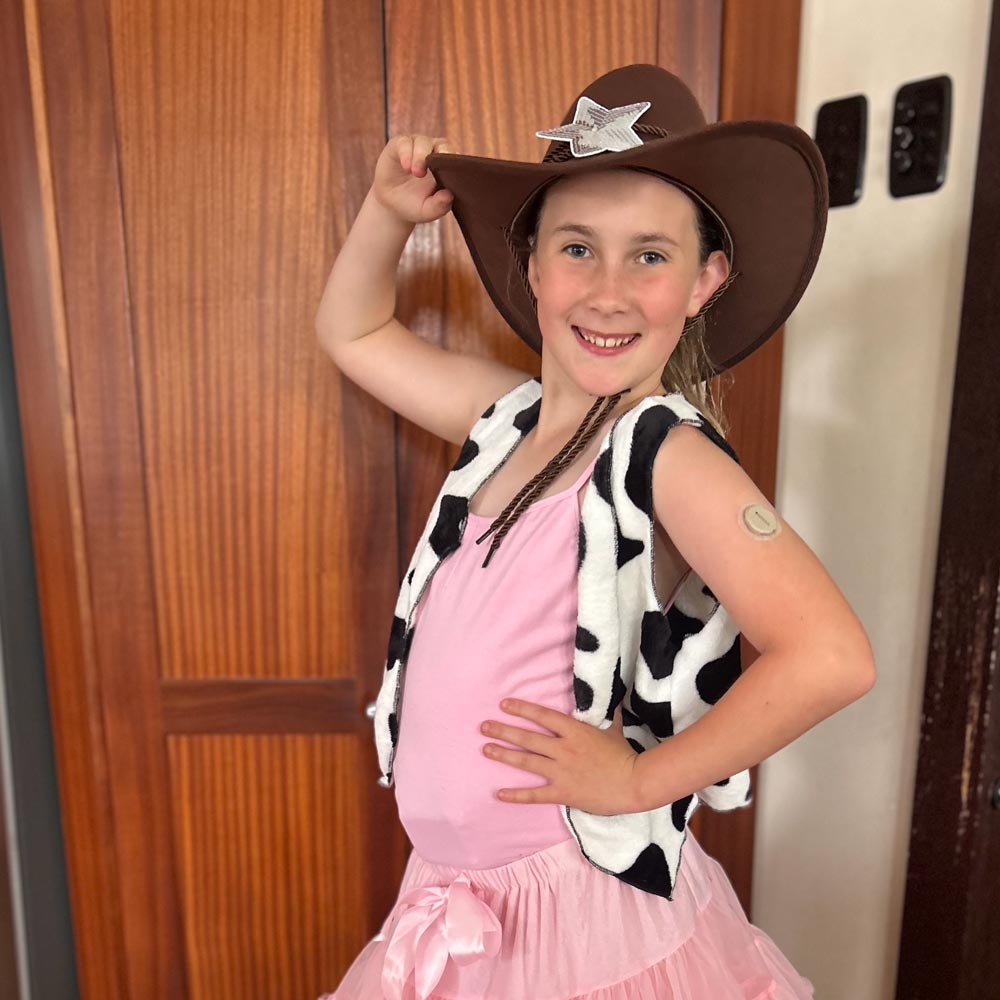
Dr Lise Hunault from the Centenary Institute is on a mission to cure Type 1 Diabetes. Excitingly her approach has the potential to completely remove the need for a lifelong cycle of daily insulin injections - providing a life-changing solution for millions.
Piper’s story
Piper was two and a half years old when she was taken into hospital lethargic, vomiting and wheezing.
She was rushed into critical care instantly, her mum and dad, Bec and Mark, in shock as hordes of hospital staff piled in, inserting cannulas into their needle-phobic toddler. Piper was so ill, she just lay still.
Piper was in DKA - Diabetic ketoacidosis - where a lack of insulin causes ketones to build up in the blood. Bec and Mark were told that Piper had Type 1 diabetes and was no more than two hours away from falling into a diabetic coma and passing away.
Mark didn’t leave the hospital for five days, while Bec travelled back and forth, going home to breastfeed their second daughter, Hannah, who at just three months old, was in and out of oncology with a tumour.
When Piper came out of hospital, the whirlwind began. Finger pricks every hour to check blood sugar levels, mind-boggling calculations for carbohydrates in Piper’s food, weighing and measuring every meal, overwhelmed by the process and the thought of what could happen if the wrong calculations were made.
Rest didn’t come at night either. In the beginning, Mark and Bec would have to wake every two hours to check Piper’s glucose levels. “I don’t think I’ve had a good night’s sleep for eight years,” says Mark.
Piper now wears a Continuous Glucose Monitor (CGM) - a device that tracks glucose levels without finger pricks, using a small sensor under the skin to transmit real-time data to a smartphone. The family calls it her ‘robot’. She also has an insulin pump that delivers insulin through a cannula, replacing daily injections.
“It made such a difference, but it still takes a psychological toll on you as a parent,” says Bec. “There are times when we do the pump change and she’s screaming so much you’d think the neighbours would call the police.”
Piper is a funny, positive and sporty child with a quirky sense of humour - like any 10-year-old in so many ways - but she hasn’t led the carefree life that children should. Each day is a constant monitoring of glucose levels and calculating when and what she will eat so that she can dose insulin appropriately.
There are days when she will collapse in her parents’ arms sobbing and asking ‘why me?’
“She’ll say to me, ‘Dad, I don’t want diabetes anymore’, and it just breaks your heart. I wish I could take it away. I wish I could do something.”
But despite the sacrifices and challenges, Bec and Mark remain hopeful.
“You’ll be having a tough day and then you’ll be reminded that there are people out there doing amazing research. You hang on to that hope and the new breakthroughs and it gives you that glimmer of what could be.
“We’d love to have the burden taken off Piper and all of the other families going through the same thing,” says Mark.
Vanessa’s story
Vanessa in ancient Greek means butterfly and she really was our beautiful butterfly - a stunning natural beauty with big blue eyes. You never got sick of looking into those magnificent warm, kind eyes. She was full of love and just finding her wings.
At 24, she was the Assistant Director at a before-and-after-school care centre. She was such a natural with children and that’s one of my big heartbreaks - she would have made a wonderful, wonderful mother.
All the kids loved her. She’d implemented an ‘acts of kindness’ activity, which morphed into a big wall where people would write kind things or post notes.
Being kind was a really big thing for her, ever since she was a young girl. She embodied hope, kindness, and positivity, living life by a simple but powerful mantra: ‘Hope and love is all around you.’
The day we lost her was just so incredibly traumatic. Vanessa had woken up that morning and spoken to her best friend. She was expected to get out of bed and go to work but she didn’t. Her dad, Nick, found her, and it was just sheer horror and panic.
We tried to resuscitate her, but we knew she was already gone. We called the paramedics and soon after, the house became a crime scene.
The police were as respectful as they could be, but they had to do their job.
We waited around 13 months before we got a reason for Vanessa’s death. Eventually, we were told that Vanessa had long QT syndrome, which is a genetic arrhythmic disorder.
As a family waiting, you are absolutely lost. You have no answer. We now know that there is usually a very long and difficult coronial process and delays in accessing genetic testing and receiving answers. During that time, we were also living with the constant fear for our son, Peter, Vanessa’s older brother, not knowing whether he too could be at risk. It is an experience that no family should have to endure, yet so many do.
That’s why we have chosen to support the research into Sudden Cardiac Death at Centenary.
It feels like there’s a collaboration between the families and the researchers. We all want the same thing. We all want answers. We feel the immense compassion, passion and determination in their eyes, but that will only get us so far because it’s the funding that drives the research.
I ask you to put yourself in our shoes for just a moment and imagine how devastating this reality would be for your own family — because while hope and love matter deeply, they are not enough on their own; real change depends on people digging deep and providing the funding needed to drive this research forward.
While our grief remains, so too does our love - and our determination to honour Vanessa’s life with purpose. Her legacy will not only be one of love, but of awareness, action, and ultimately helping to save others.
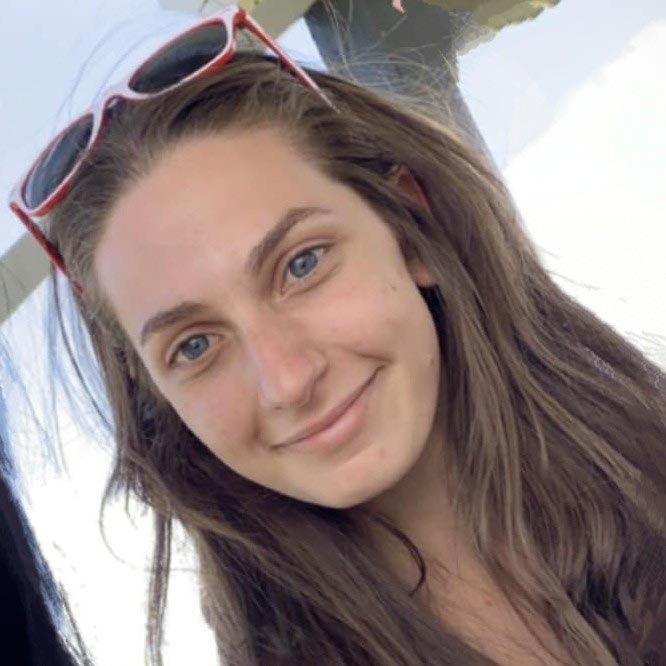
“I hope for a future where people at risk of sudden cardiac events are identified early and monitored or treated before something catastrophic happens. My aim is to provide answers for families like Vanessa’s and my hope is for a world where no family experiences the devastating, preventable loss of a loved one.”
PhD student and Research Assistant, Emma Singer
